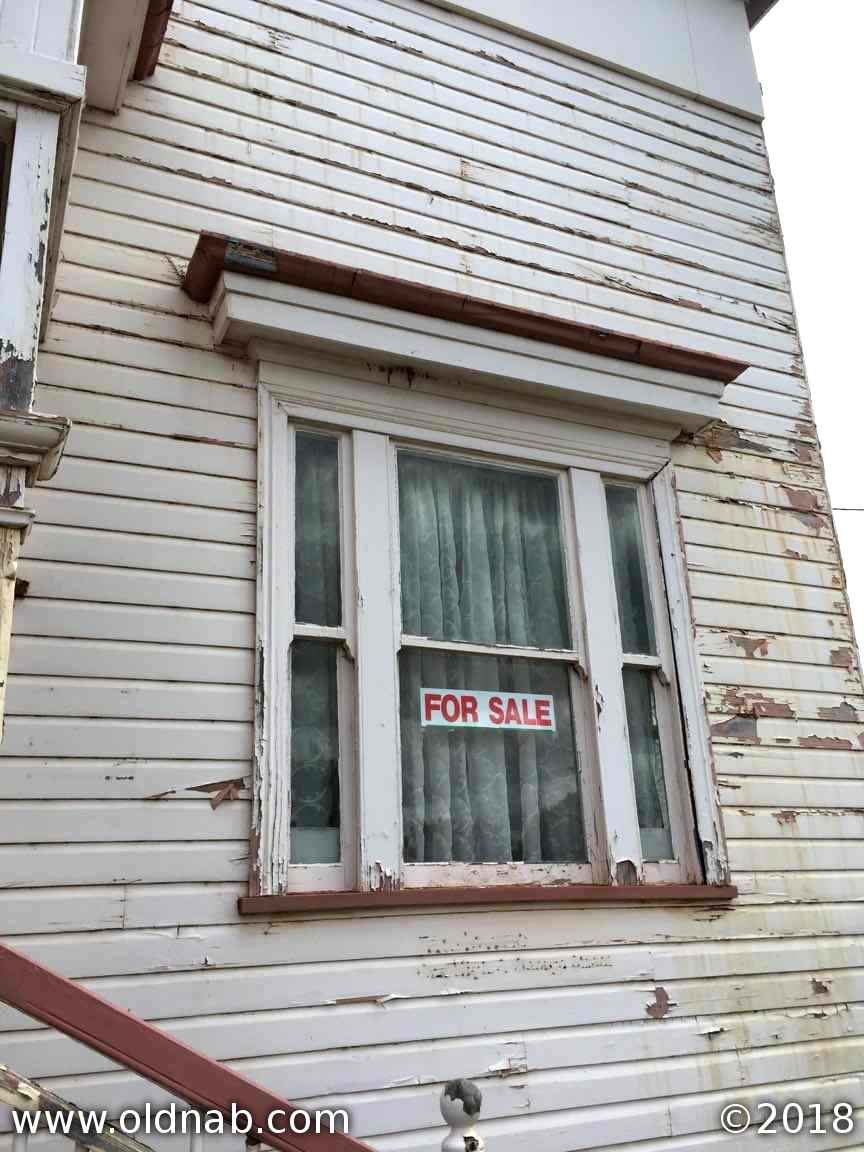
 Sometime in early February of 2018, I noticed a “For Sale” sign in the front window of the Old Nab, a building which has fascinated me ever since I learned it was a private residence shortly after I moved to Jandowae in 2006. This was the second time the building had been offered up for sale since I lived in Jandowae, unfortunately I wasn’t in a position to purchase it the previous time either. I mentioned the sign to my mum and stepdad who asked me to enquire further.
Now, when I say a “For Sale” sign, I am describing the sign in full. Just a small, white sign with the words “For Sale” in red and nothing else – it had no phone number, no real estate information, and no other clues as to how to contact the owner for further enquiry. I spent the next few weeks trying to track down first the owners’ names, and second, a way to get a hold of them. Eventually though, primarily through word of mouth (as generally the most successful method in a little country town) we got hold of the owners and arranged our first walk-through.
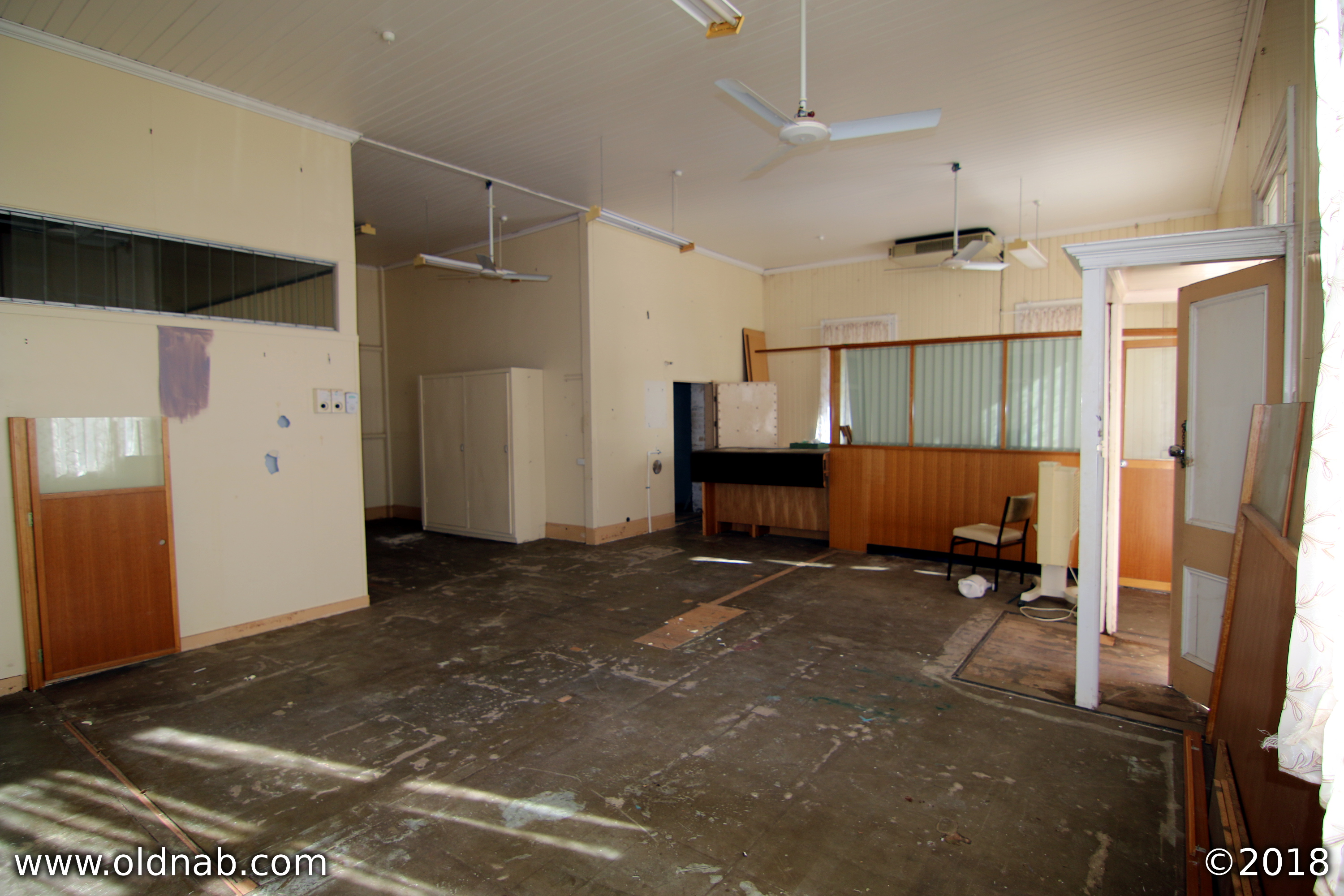 The thing that astounded me most is that the old Manager’s office walls were still there untouched, the side partition door for the tellers was still screwed up on the wall and the rest of that wall was still there completely intact, and even the teller bench was still there, although it had suffered some chopping and changing in the past couple of decades. We’ve since worked out the branch closed in around June-August 1996 which makes it 22 years and four prior owners who didn’t turf these old relics. As a result, our plan is to reuse as much of these as possible.
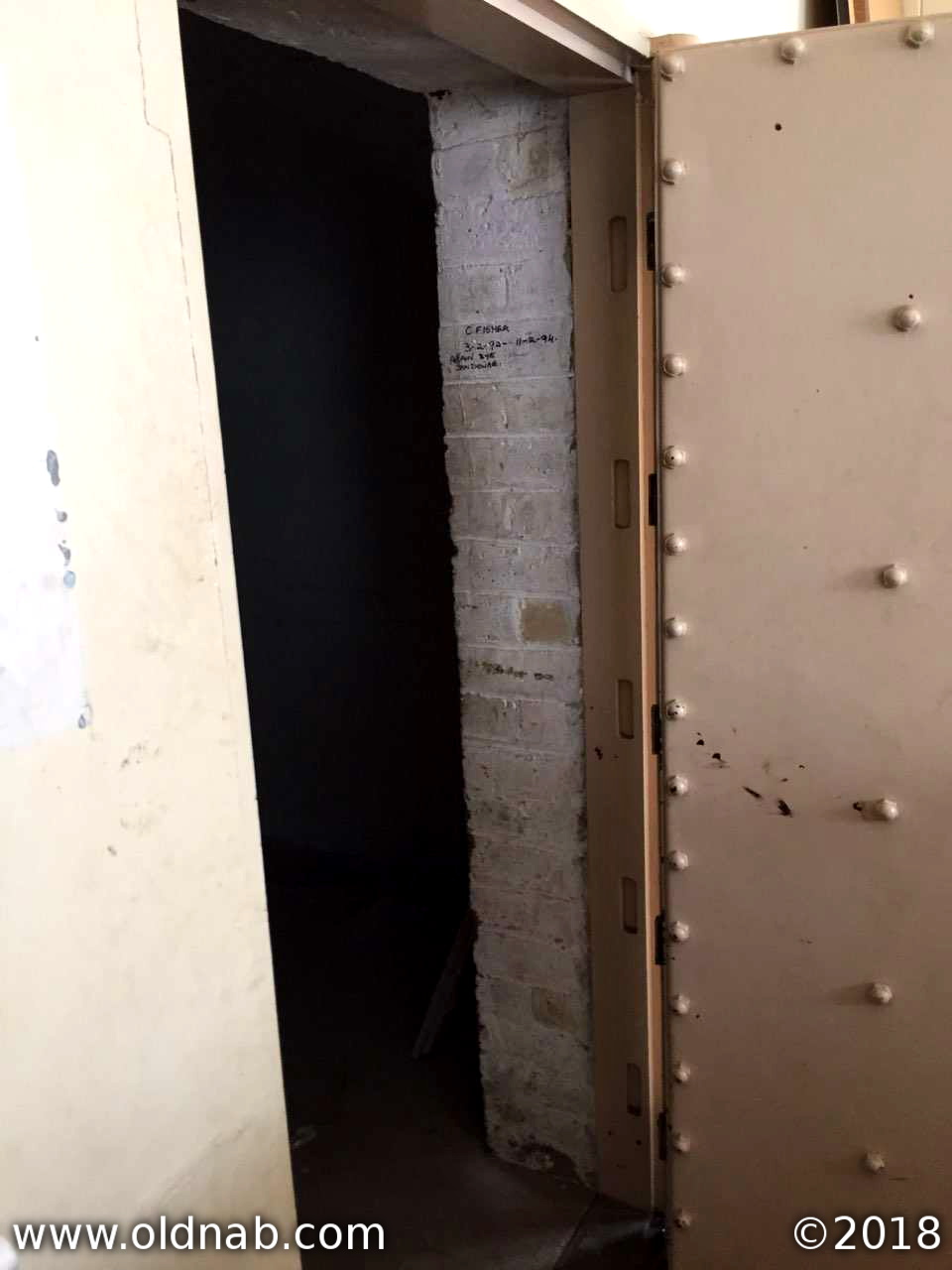
 And of course, the vault! Albeit perhaps a little worse for wear, curious are all the names and dates which adorn its walls. Notably, quite a number are dated much earlier than the 1996 closure date. The key for the vault is still there too, although it’s hung high and out of reach so as of yet we haven’t tested it.
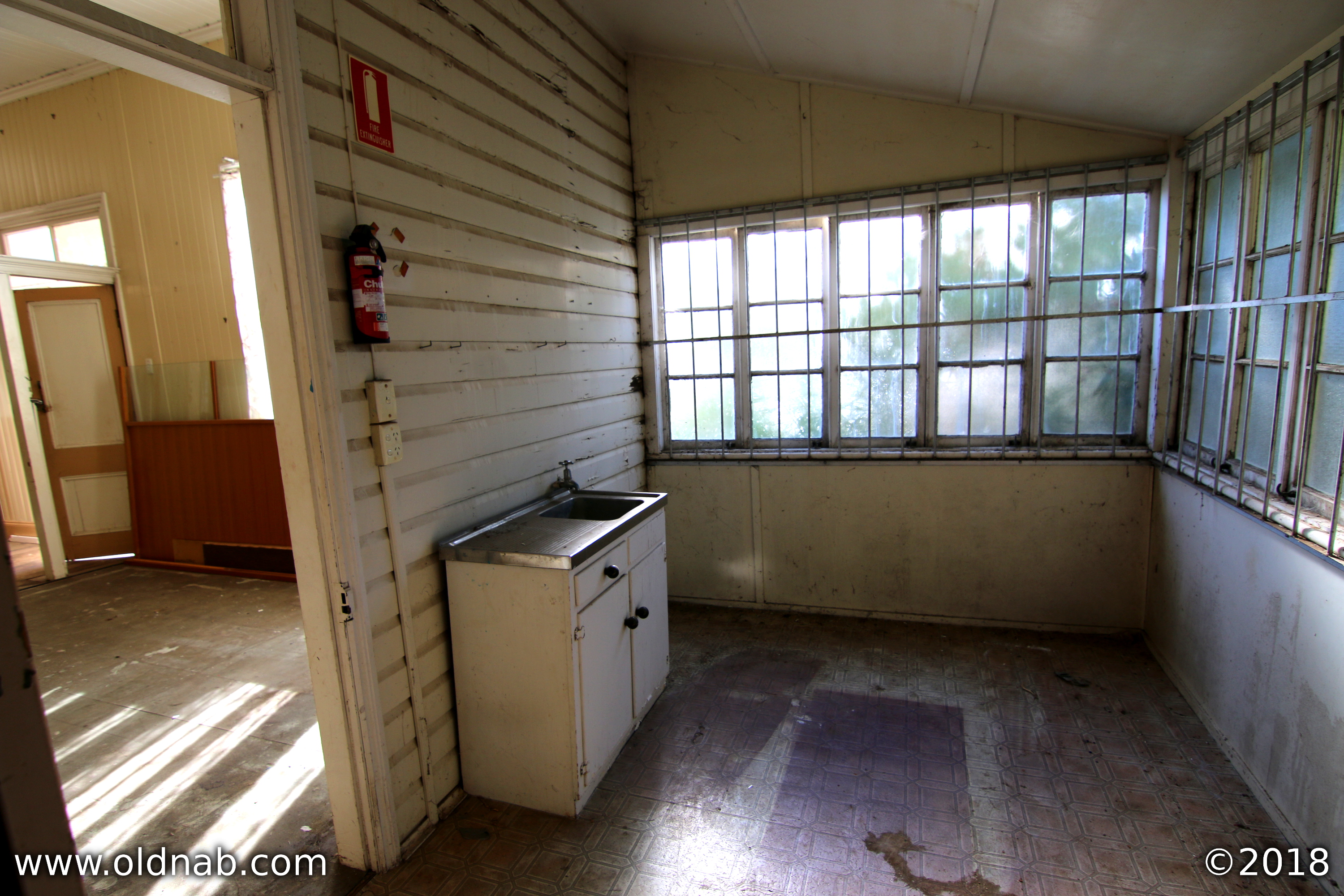 The foyer/commercial area of the building also includes part of the old verandah, which was closed in most likely during the renovations in 1956. In the photo of the building in blue (see the Chronology section) you can make out that the verandah was still open. The 1966 photo most certainly shows the verandah closed in.
 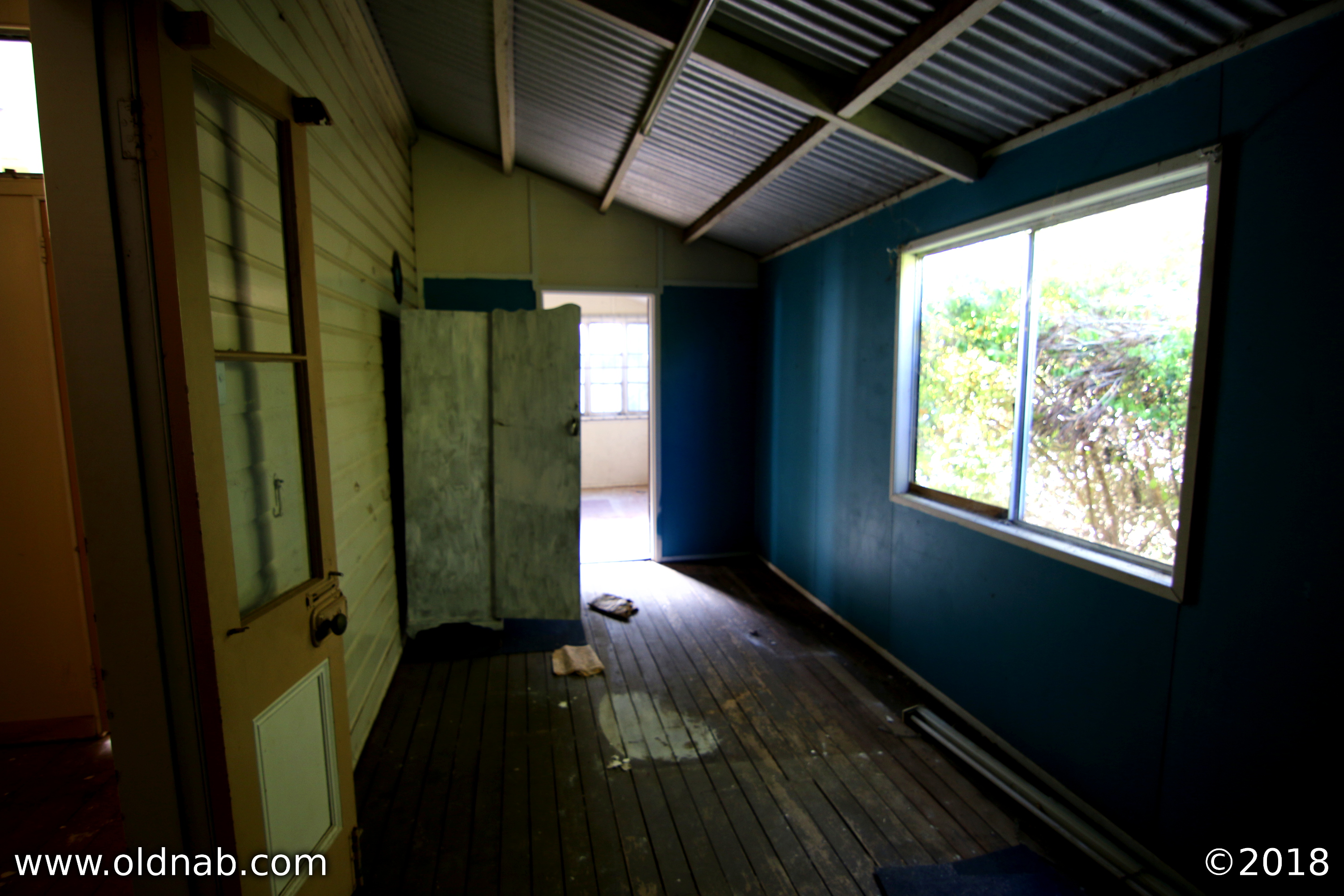 That said, it is quite likely that only the small front room was closed in at that time since it exhibits a laminated floor, a closed in ceiling and bars on the windows, perhaps for a coffee/lunch room due to the plumbing that was probably added at the same time and has since been disconnected. The blue room behind this small front room lacks a completed floor and ceiling, thus it is likely it was closed in at some point as an afterthought.
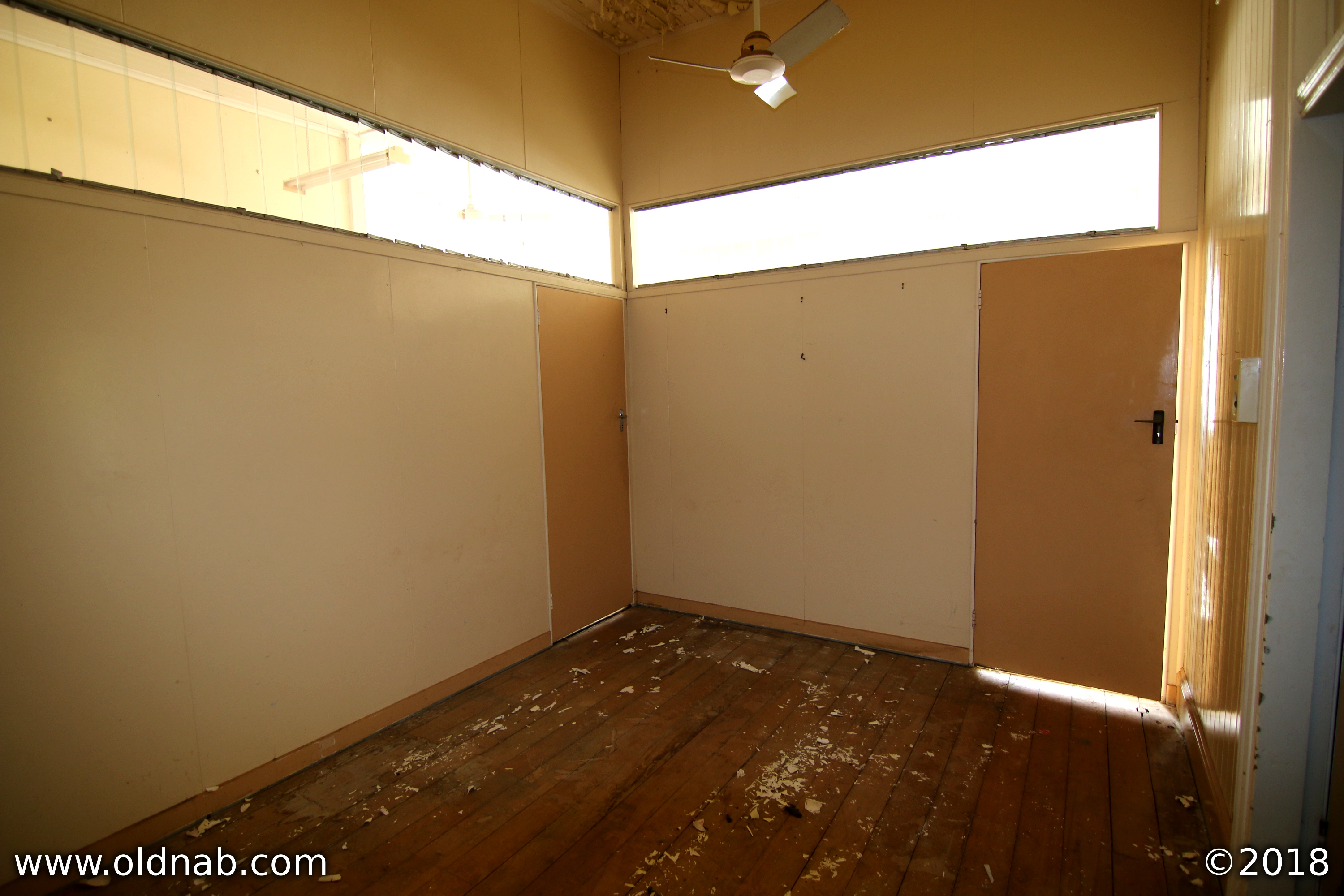 The entrance to the old manager’s residence is hidden through the room that connects not only to the blue ex-verandah room through a set of french doors but also to the branch foyer through two more doors – one through to the tellers’ area, the other leading to the public area. That makes a door on every wall of this room! Unfortunately at that time we were not able to view through the tenanted residence in the rear of the building, but were able to organise a viewing at a later time.
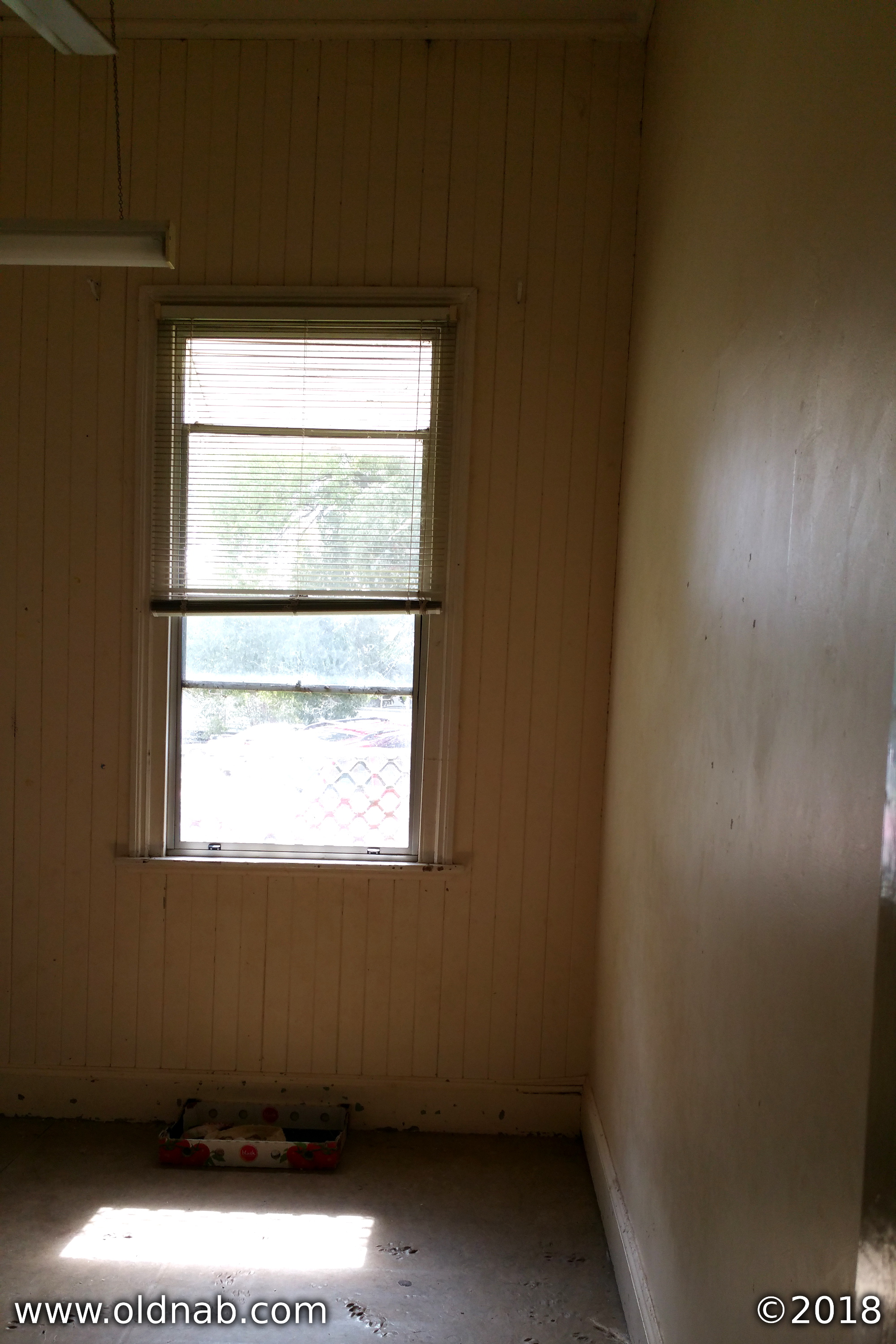 The residence consists of three smaller and one master bedroom. One of the smaller rooms shares a wall with the back of the vault, another is right at the end of the building, and the remaining two bedrooms have french doors leading to the old, now closed in, verandah. The fireplace in the living room is beautiful, although at some point (perhaps for fire safety) it seems it was disused in favour of a wood burning stove which appears to have been moved from its original position in the main living room thoroughfare to a less in-the-way spot next to the mantle.
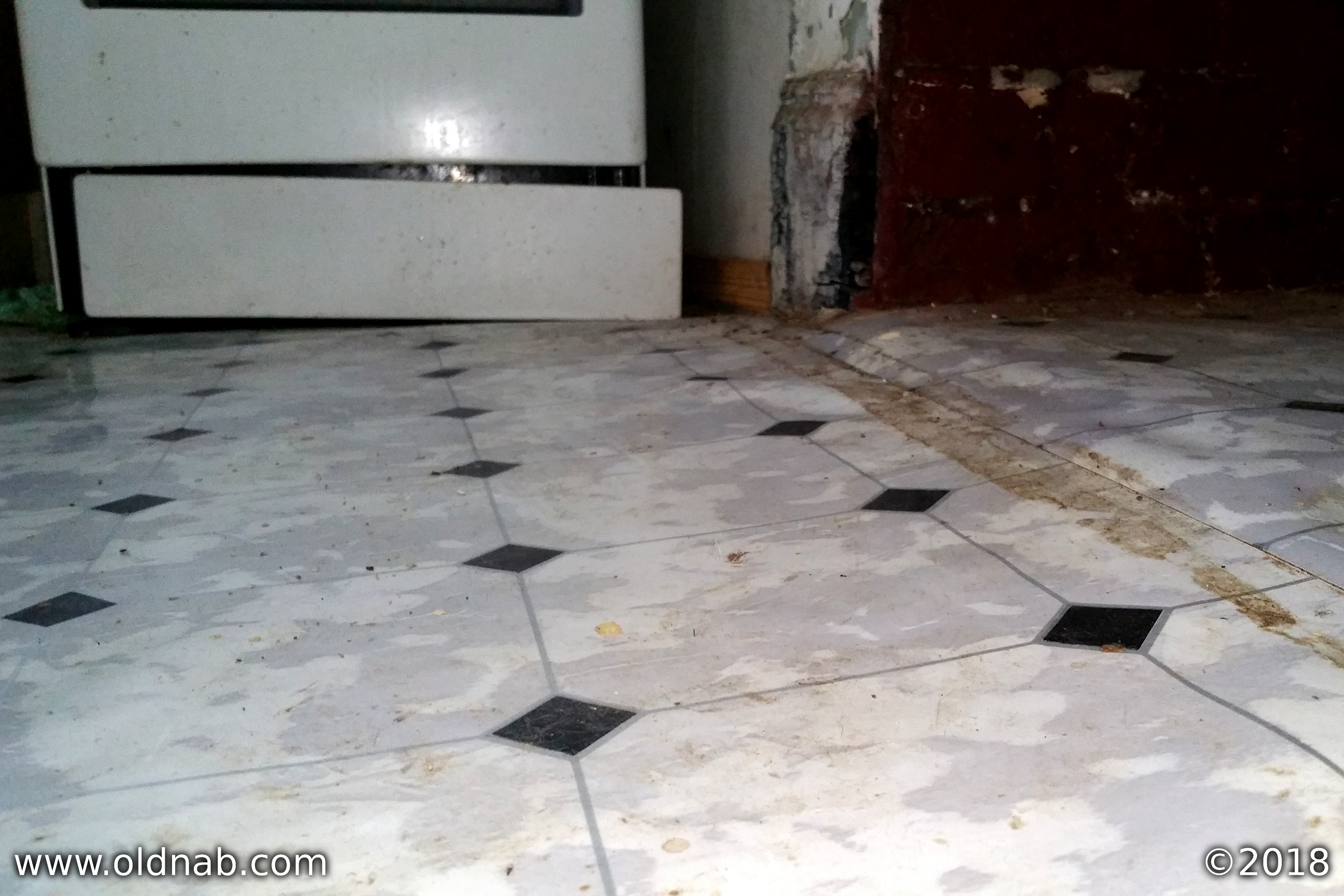 The kitchen at some point suffered a small fire, evidence of this was still in plain sight. Enquiries within the town revealed that something fell off the hot stove, which at that time was housed within the old stove cavity that backs onto the fireplace, and caused a small fire. We will find out just how extensive once we lift the linoleum, however the walls seem to have been largely protected and unharmed. Along with the very front of the foyer, the kitchen was the main area that really showed the subsidence some of the stumps had succumbed to over time. It made it pretty clear that levelling the building would have to be priority #1.
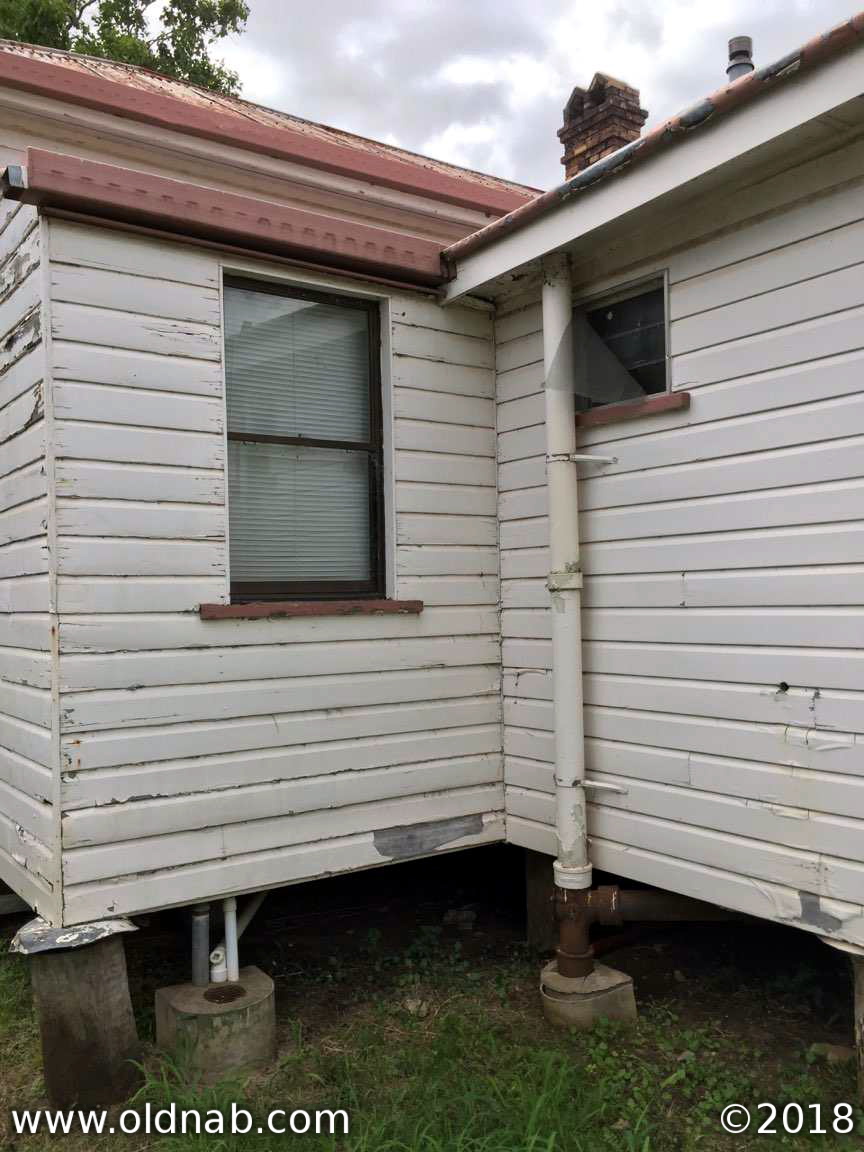 Another big trouble area was the added double toilet room. We believe that due to the height of the roofline in this area of the building, the roof for this little outcrop was sloped towards the existing roof. The process of adding the toilet room roof was either not thought out well enough or not executed very well, either way there is evidence of tremendous leakage into the ceiling cavity and down the walls. This is most certainly a concern that will have to be rectified as soon as possible, considering that there is not much point in restoring, fixing and painting floors, walls and ceiling in this area if it’s only going to be damaged by the weather.
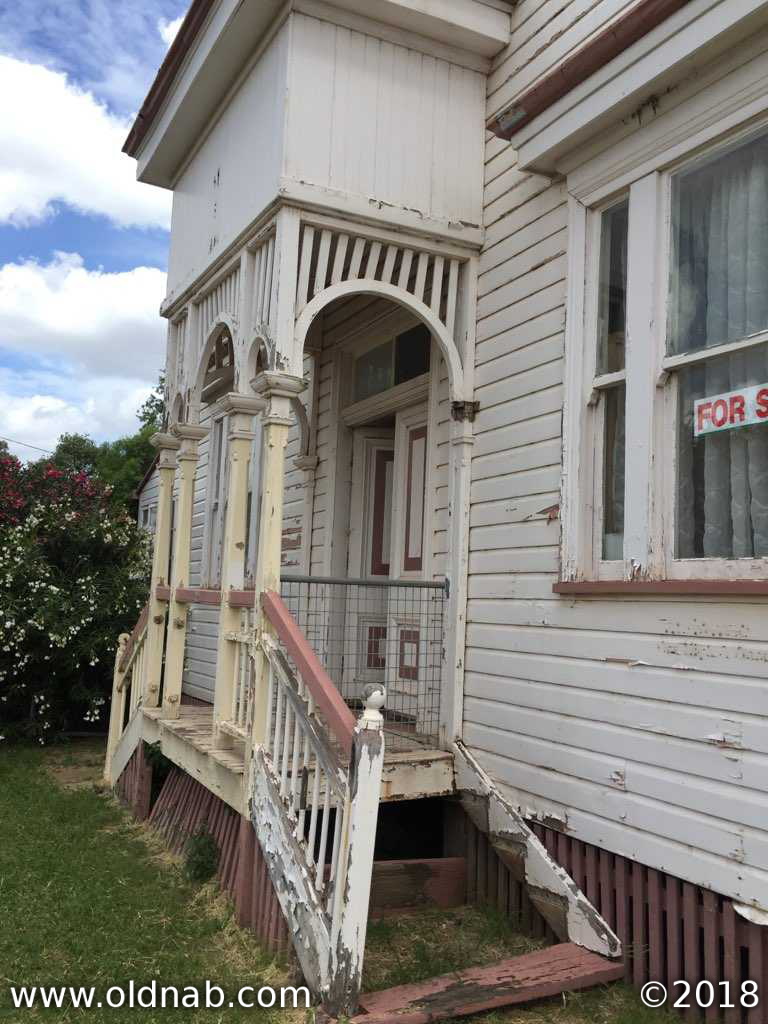 Overall, for a building that is 104 years old, it is in incredibly good condition. No evidence of termites was found except in the separate garage and old evidence in one of the beams in the ceiling cavity near the front fascia of the building. This in itself is a minor miracle, as it seems almost every property in town has been affected by termites at some point or another. Of course the bathroom and kitchen desperately need updating. The floors throughout have been covered, thus protected, for most (if not all) of their life. Small exceptions include the two bedrooms that lead onto the old verandah – these have had a dark varnish applied at some point, although not terribly well. The majority of the internal paint is still in very good condition, with the exception of the ceiling in the branch side of the building which is flaking off. The external paint job is well beyond its retirement years and will likely need to be completely stripped to bare timber and redone. This will include filling a few areas where small amounts of wood rot have set in. The roof, painted for the first time in around 1956, desperately needs to be stripped and repainted. Half of the front stair case needs to be recreated from new materials due to the wood rot that had set in. Unfortunately buying a pre-fabricated staircase kit will be out of the question due to the unique sizing of the treads and the overall appearance of the staircase. The guttering will also have to be rerouted, as it is one of the primary causes of the subsidence in the piers. First things first though, the levelling!